
The Hungarian Europe Society's latest project intends to discuss the past and present problems of authoritarian and illiberal politics.
HES would like to focus on issues of how and why intellectuals and experts have served Orbán’s dreams about a political transformation towards illiberal regimes domestically and globally as well as the relevance of today’s German and French ideological confrontations about the future of our era. In the meantime, many public figures have refused to support illiberal populism in Hungary, whilst the reserves of European liberalism are still powerful. Our international dialogue on the renewal of liberal democracy and the role of intellectuals and experts would help in finding historic and current ideological crutches for the protagonists of liberal political societies.

Facing the Tide: Understanding and Countering the Illiberal Populist Surge
The event and the forthcoming publication have been supported by the Friedrich Naumann Stiftung für Freiheit.

The Visegrad Group holds a unique position at the heart of Europe, shaped by its geographical location, intertwined histories and shared values. Comprising countries that have undergone similar transitions on their path to democracy, and united in a common effort to join the European Union and NATO, the V4 is bound by a shared experience that sets it apart.
This common past not only reinforces solidarity among the member states but also positions them as credible voices in shaping the future of European integration and security. United by core democratic ideals, the V4 can offer valuable insights into navigating contemporary challenges, making it a vital contributor to the broader European dialogue.
Today, Central Europe is grappling with significant democratic challenges, marked by a weakened rule of law, compromised media independence and the rise of illiberal governments. These issues erode public trust and the foundations of democracy, fostering political polarisation and societal fragmentation. The situation is exacerbated by external pressures, including the ongoing war in Ukraine, which looms large on the region’s periphery. This conflict not only destabilises neighbouring areas but also amplifies economic strain and security concerns, leaving citizens feeling disoriented and under pressure.
Amid such turbulence, many struggle to reconcile national interests with democratic principles, as governments often exploit crises to consolidate power. This interplay of internal and external threats creates an environment of uncertainty, in which democratic resilience is continually tested. Addressing these challenges requires reinvigorated civic engagement, international cooperation and robust safeguards to uphold democratic norms and institutions.
The Res Publica Foundation, together with its V4 partners, has launched a unique project, The Voices of Visegrad, comprising short videos as well as explanatory texts. The campaign aims to provide media coverage of key issues relevant to the Visegrad region, raising awareness and ensuring greater access to information.
By featuring the voices of prominent stakeholders and emphasising the shared principles and achievements of the Visegrad Group countries, the project fosters a stronger sense of regional identity and solidarity while addressing issues specific to the region. Encouraging citizens to comment on the content and contribute to V4 initiatives boosts civic engagement and promotes a bottom-up approach to collaboration.
Ideas? Comments? Would you like to ask Visegrad Group public opinion leaders a question?
Please do stay in touch via: fundacja@res.publica.pl.
Project partners are:
Visegrad Insight – Res Publica Foundation
EUROPEUM Institute for European Policy
Bratislava Policy Institute
Hungarian Europe Society
Supported by the Visegrad Fund

A Mothers of Europe egy olyan kezdeményezés, amely a modern Európát alakító nők úttörő teljesítményének történetét meséli el, olyan nőkét, akik a demokrácia, a társadalmi progresszió és az igazságosság védelmezői voltak, mégis alulreprezentáltak a történelmi ismereteinkben.
A történelemről szóló beszédmódunk egyúttal hatalmi viszonyokról is árulkodik. A kollektív emlékezet és a nők bevonása a történelem elbeszélésébe - vagy éppen abból való kizárása – erősen hat a nőknek a mostani társadalmakban betöltött szerepére. Projektünk célja, hogy megemlékezzen azokról a kiváló nőkről és felhívja rájuk a széles közvélemény figyelmet, akik elősegítették a demokratikus átmenetet, erősítették az európai integrációt és formálták az Európai Unió értékeit. A nők történelmi jelentőségének bemutatása egyben a jelenkor női szereplőit is megtámogatja.
A projekt workshopokból és kiállítás-sorozatból áll, amelyet az együttműködő partner szervezetek három magyarországi és további tizenöt európai városban rendeznek meg. A kiállításokhoz közös kiadvány társul, amely a nagyformátumú nők munkásságának történelmi hátterét kívánja mélyebben feltárni.
Mothers of Europe has received funding under Grant Agreement no 101143916, from the European Education and Culture Executive Agency (EACEA) under the Citizens, Equality, Rights and Values Programme (CERV) programme.

The Hungarian Europe Society - together with its partners, the 21 Research Center and the Republikon Institute - intends to continue its investigation on the future and renewal of liberal democracy globally and in Europe.
The project is supported by the Friedrich Naumann Foundation for Freedom.

The EU-funded DIACOMET project will advance ethical and accountable communication by promoting capacity building for civic resilience against disinformation and civic accountability. The project will generate a concept of dialogic communication ethics, providing a framework for an inclusive model of accountability mechanisms that combine media accountability with civic accountability, bound by a civic code of good communication conduct (a new type of communication ethics).
Funded by the European Union (grant agreement ID: 101094816).

The project aims to mitigate deepening media polarisation in support of voters’ informed decision making in Georgia and V4 states by assessing internal and external political factors that stimulate polarisation after the start of the war in Ukraine, as well as by promoting dialogue and experience exchange between media and civil society of Georgia, Slovakia, Hungary, Czech Republic and Poland. Project proposal focuses on the critical challenges of media polarisation and responds to the questions about how to cope with increasing pressure and make media more accountable. The project also aims to distinguish the mechanisms to mitigate polarisation in the media and find the ways of how media can facilitate political debate to help voters make informed decisions based on the best practices.

The protagonists of liberal democracy and open society – liberal-minded political actors, civil groups and citizens - face ongoing populist ideological attacks against the fundaments of our liberal political system as well as the erosion of shared universal and European values in big portions of the populations. Although an anti-liberal U-turn has not occurred globally, the emergence of authoritarian states, especially Russia and China, and the significant influence of illiberal political entrepreneurs within the international democratic community have recently made the serious challenge more salient. It is still not too late to conceptualise how a wide circle of stakeholders, who believe in the future of liberal democracy and the liberal world order – including the reform capability of the European Union - might and should react assertively to the major political threat of our current era. There are positive examples worldwide which give us hope about the resilience of liberal political regimes. In worse cases – just like in Hungary – the political renewal of pro-European and liberal-minded actors need much more intellectual, visionary, strategic, organisational and communicative innovations in order to regain their dominant role in the political arena and the public spheres.
We intend to deal with the future of democracy globally and the social-political challenges to the liberal world order. Our focus is on the Summit for Democracy initiated by the Biden administration and its potential impacts on political development at global, regional and national levels from the perspective of civil society. We invite high-level speakers and participants from both sides of the Atlantic to an interactive conference to be held in Budapest. It is our intention to analyze the goals and chances of the summit both from theoretical and practical perspectives with experts, scholars, intellectuals, professionals, NGO-s, citizens and other stake-holders as speakers as well as participating audiences. Civil groups still have a chance to interfere and influence the outcome of the summit with recommendations: we emphasize the criteria and significance of human values and liberal principles, minority rights, the rule of law, political liberties, intercultural dialogue, civic education, new methods for citizens’ participation, media pluralism, digitalisation, transparency, green transformation, social justice, and, last, but not least, the importance of securing the international liberal world order.

The project entitled “The Future of Democracy: Strengthening Liberal Values, Institutions and Procedures at Global, European, Regional and National Levels” has been launched in March 2022, supported by the Friedrich Naumann Foundation for Freedom.The Future of Democracy: Strengthening Liberal Values, Institutions and Procedures at Global, European, Regional and National Levels
Liberal democracy has been under attack worldwide in national and regional public arenas as well as through the increasing international geopolitical race between the democratic Western world and strengthening (semi)-authoritarian regimes. The beginning of the twenties of the 21st century has brought up new risks and threats to the surface: environmental emergency, an unknown pandemic, migration, growing economic inequalities, the contradictions of a post-truth era, ideological/cultural as well as social/geographic polarisation and fragmentation, extreme right-wing identity politics, and soon.
The Hungarian Europe Society has two particular focuses which comprehensively incorporate the above mentioned themes. First, the Conference on the Future of Europe that was launched in May 2021 works with an open agenda and its settings let participants discuss all kinds of policy issues as well as legal and institutional renovations. Second, the Summit for Democracy, invented by the Biden administration, goes beyond transatlantic relations regarding its more ambitious, global scope in order to bring together democratic states for action worldwide. Both big exercises give civil groups, think tanks and citizens the chance to interfere and influence conceptual considerations and practical outputs before the end of the deliberations.

The EUritage project celebrates the 30th anniversary of Central European democratic revolutions as well as the 15th anniversary of their accession to the European Union. The project is led by WiseEuropa, Warsaw, together with the Institut für Europäische Politik in Berlin, Metropolitan University Prague, City of Gdańsk and the Hungarian Europe Society. It is co-financed by the European Commission within the framework of its Europe for Citizens programme.

In our tumultuous times faced with the growing challenges of climate change, great power politics and their security implications, inequality in all its forms, or the economic recovery in the aftermath of the ongoing COVID-19 pandemic, the importance of dialogue and creative, innovative thinking is indisputable. In the era of fake news and disinformation, respectful and fact-based exchange on how we as a transatlantic community want to shape our future is essential. In line with its mission to provoke and promote dialogue on current affairs, the proposed project of the Hungarian Europe Society seeks to provide platform for such an exchange between opinion leaders with conflicting views from Europe and the United States and the wider public - in the form of essays and online discussions - on topics ranging from the future of transatlantic relation, transition to a green economy, the challenges of digitalization or the future of liberal democracy.
Our aim is to improve our understanding of the implications of selected challenges, generate potential common solutions and to facilitate exchange and contacts between American and European (especially Central European) communities. We plan to close the project with a workshop that will function as an idea-incubator and will kick-off new, innovative projects based on the year-long exchange between HES and its partners.

The project is funded by the International Visegrad Fund and implemented by Europe without Barriers (Ukraine) in the partnership with Nasz Wybor (Poland), Poradna pro Integraci (Czechia), Research Centre of the Slovak Foreign Policy Association (Slovakia) and Hungarian Europe Society (Hungary).
The project is aimed at widespreading in popular media of detailed and argumentative data about the new labour legislation in V4 countries, methods of legal employment, sources of statistical data and expert interpretation.
International team of researchers from Ukraine, Poland, Czechia, Slovakia and Hungary will create a guide “Myths and stereotypes about Ukrainian labour migration to V4 countries”, covering media image of labour migration from Ukraine in media of 5 countries, analyzing the most common mistakes and myths, providing sources of trusted data for journalists, state officials and public persons who intend to make public statements about labour migration.
Project includes a workshop-presentation for Ukrainian journalists and experts in Kyiv with participation of foreign co-authors of the guide, and a series of presentations of the guide in V4 countries’ capitals.
Also Europe without Barriers will coordinate a 3-month competition for Ukrainian journalists in 5 categories: the best analytic publication, best explainer (“how to”), best reportage, best interview, best TV/radio program about labour migration to V4 countries.

A Magyarországi Európa Társaság kutatócsoportjának projektje "Hol áll a PERC-mutató avagy az EU- destruktívaktól a föderalistákig: a magyar pártok viszonya az Európai Unióhoz" címmel.

A Magyarországi Európa Társaság közép-európai térséggel foglalkozó rendezvény-sorozatot indított azzal a céllal, hogy a visegrádi országoknak az Európai Unión belüli szerepét vizsgáló és az illiberális, populista narratívákat elvető alternatív koncepcióknak és elképzeléseknek teret adjon. A MET létre kívánja hozni a hasonlóan gondolkodó kutató intézetek, civil szervezetek és egyének hálózatát a régión belül és azon túl.
A MET tagja a Koalíció a Vízummentes Európáért nevű nemzetközi együttműködésnek, amely a vízummentességet kívánja előmozdítani a Keleti Partnerséghez tartozó államok és Oroszország állampolgárai számára.

Az Európai Unió előtt áll az európai polgárok bizalmatlansága. A Maison de Az Europe de Paris és partnerei meg vannak győződve arról, hogy azáltal, hogy ösztönzik a tudást az Európai Unió történelmét és aktuális szerepét, az uralkodó bizalmatlanságot ezek a napok eltűnhetnek. Ezért a párizsi Maison de l'Europe kifejlesztette EUbyCITIZENS projekt, amelynek célja a különböző csoportokból érkező polgárok elérése 10 országban letelepedett partnereken keresztül. A projekt a tagállamokban zajlik (Franciaország, Bulgária, Spanyolország, Magyarország, Lengyelország, Szlovénia, Románia) és a jelölt (Montenegró, Bosznia-Hercegovina, Szerbia), keletről nyugatra Európában. Ez a politikai és földrajzi sokszínűség az európai kultúra gazdagságát képviseli. Azt
lehetővé teszi az EU és annak problémái közötti ellentétes kilátások kialakulását, és garantálja a projekt relevanciája. A cél az, hogy megadja a kulcsokat a jobb megértéshez Az európai történelem és a jelenlegi európai politikák a polgárok jobb bevonása érdekében a demokratikus folyamatban.
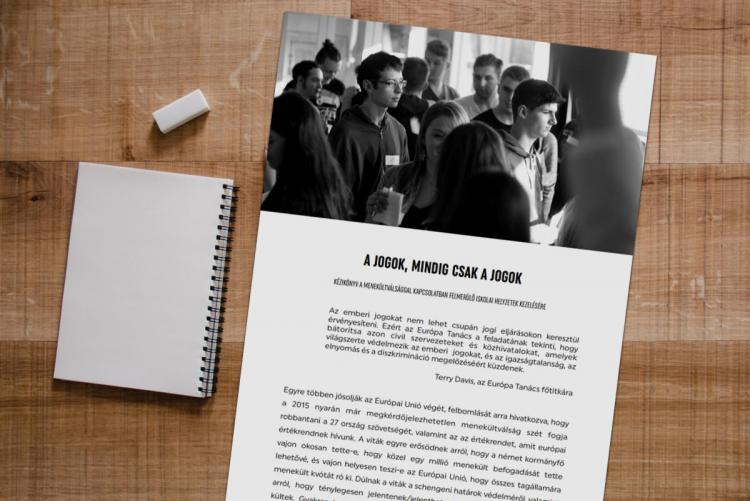
Hatalmas különbség van az EU által garantált jogok és ezek gyakorlása között jogokat. A tisztázatlan törvények, a felmentés vagy a megtorlástól való félelem meggátolhatja az embereket
ismerete és élvezete jogait. A Citizen Rights projektben az Európai Alternatívák meg akarják nézni, mikor és ahol az emberek az EU-ban egyénileg és kollektíven védelmet nyújthatnak és továbbhaladhatnak jogokat. Azt is szeretné látni, hogy hol korlátozzák jogaik gyakorlását és hogyan képesek a transznacionális együttműködés elképzelni és létrehozni egy olyan jövőt, ahol a jogok vannak aktív védelem alatt áll. Az Európai Alternatívák a projektet tizenegyével partnerségben hajtják végre európai szervezetek, köztük a Magyar Európa Társaság.

Ez a projekt áttekinti és elemzi a V4 országok a menekültügyi válságra adott reakcióit. Ezeknek az országoknak a viselkedése eltér és klönbözk más országokétól és az EU válsággal szemben mutatott reakcióitól. Még az egyéni különbségeket is figyelembe véve, amelyek a visegrádi országok között megfigyelhető kiemelte az idegengyűlöletet a migránsok és a vonakodásuk tekintetében a feltörekvő uniós kvótarendszer felé. Ez a helyzet sokkolta az EU-t országok, amelyek nem európaiak, és ez okozta a Keleti / nyugati szakadék az Unióban. A projekt célja az okok azonosítása a viselkedést, leírja az evolúcióját, hasonlítsa össze a hasonlóságokat és a különbségeket a V4-es országokban, és készítsen kapcsolódó szakpolitikai ajánlásokat.

Egy évvel azután, hogy 2013. augusztus 19-én az Európai Bizottság hivatalosan újra nyilvántartásába vette az Európai Polgári Kezdeményezést a médiapluralizmus megerősítéséért, befejeződött az aláírásgyűjtés. A magyarországi kampányt a MET kezdeményezésére a Magyarországi Európa Társaság, a Mérték Médiaelemző Műhely, a Milla (Egymillióan a magyar sajtószabadságért), a Délkelet-európai Médiaközpontok Hálózata, a CivilMédia, az Európai Újságírók Szövetségének magyar tagozata és a Magyar Újságírók Országos Szövetsége vezette.

"Közigazgatási reform a visegrádi országokban: Tanulságok Fehéroroszország és Ukrajna számára"- A MET a cseh AMO (Association for International Affairs) magyar partnere ebben a nemzetközi együttműködésben, amelynek célja, hogy a modern, hatékony és demokratikus értékeken alapuló közigazgatás kiépítéséhez a Keleti Partnerség két államában - a Visegrádi Alap támogatásával - hozzájáruljon. A projekt 2012 októbere és 2014 márciusa között tartott. A MET szervezésében 2013 áprilisában Budapesten jártak rövid tanulmányúton meghívott belarusz szakértők.
